Why Warlords of the 21st Century (1982) Is a Must-Watch for Mad Max Fans
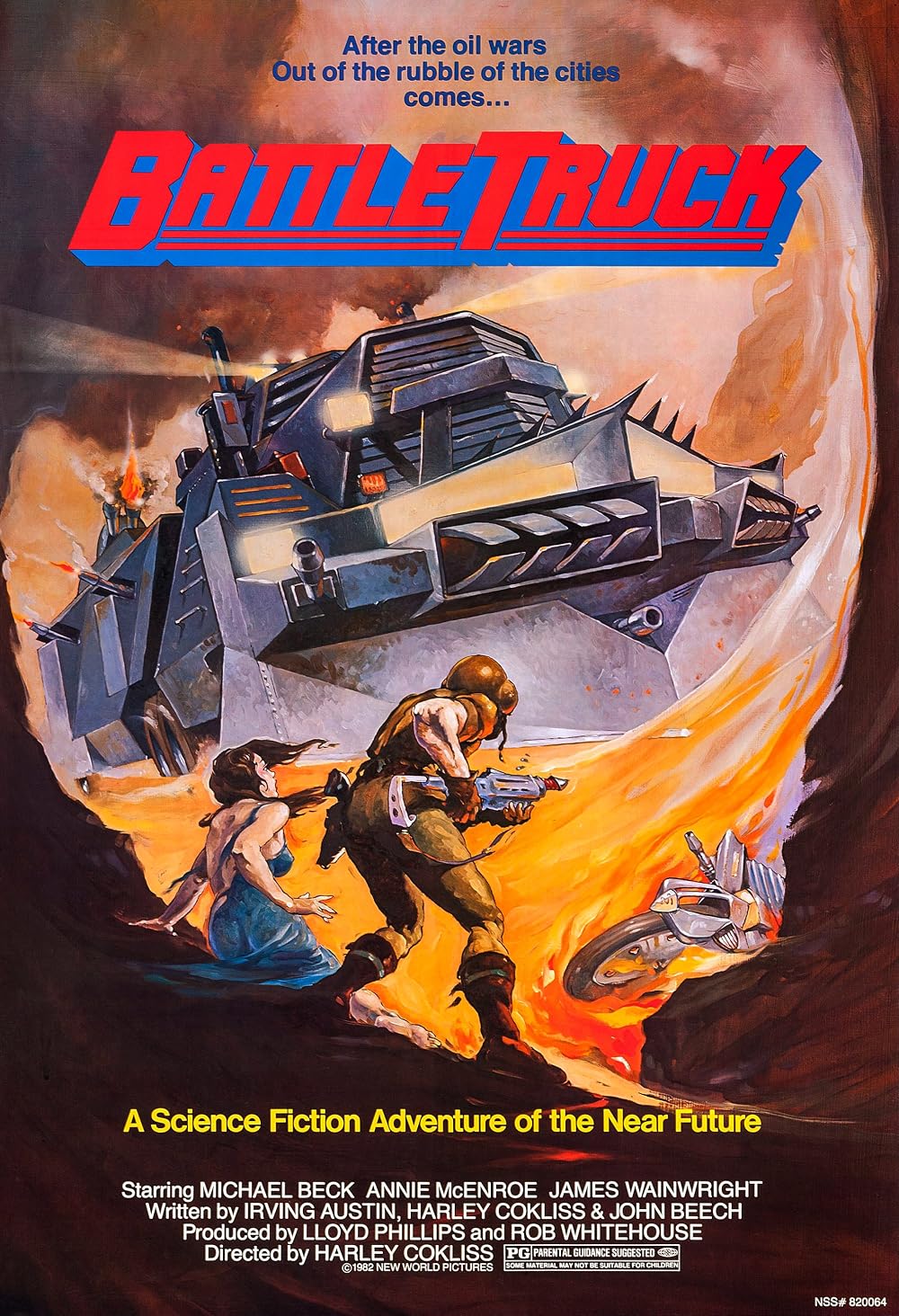
Choke down a shot of high-octane paranoia and head into the desolate, wind-swept gravel pits of the near future, where the catastrophic “oil wars” have left civilization reduced to a lawless heap of scrap metal. This is the staging ground for Harley Cokeliss’ Battletruck (1982), also released as Warlords of the 21st Century, a film proudly built on the legendary, steel-punk tagline:
“After the oil wars—out of the rubble of the cities comes—Battletruck!”
The narrative follows Hunter, a stoic, silent nomad who patrols the lawless New Zealand wilderness on a custom, methane-powered dirt bike. His solitary survivalist existence is shattered when he rescues Corlie, a desperate woman fleeing the clutches of Colonel Jacob Straker, a polite but psychopathic warlord who commands a massive, armor-plated behemoth of a truck. The rescue ignites a high-speed, explosive story arc that forces Hunter to abandon his fiercely guarded independence, unite with a peaceful survivalist commune, and mount a suicidal, head-on counter-offensive against Straker’s unstoppable, gas-guzzling land battleship.
The steering wheel of this diesel-soaked thrill ride is manned by director Harley Cokeliss, a highly capable genre craftsman who would later write and direct the cult sci-fi actioner Black Moon Rising (1986) and the Burt Reynolds vehicle Malone (1987). Michael Beck brings a rugged, albeit silent and shell-shocked intensity to the role of Hunter, a performance that came hot on the heels of his legendary turn as Swan in the gang-warfare classic The Warriors (1979) and his career-stumbling role in Xanadu (1980). James Wainwright serves as the film’s psychopathic anchor, delivering a chillingly polite and militaristic performance as Colonel Straker that remains a highlight of a prolific career filled with tough-guy roles in films like Joe Kidd (1972) and Kill Me If You Can (1977). Supporting them is Annie McEnroe as the resilient Corlie, who would go on to secure roles in Oliver Stone’s Wall Street (1987) and The Howling (1981). Behind the camera, the film boasts an incredible pedigree of technical talent, featuring stunning, dust-caked cinematography by future Academy Award-winner Chris Menges, an early appearance by New Zealand icon Bruno Lawrence, a pre-Cheers John Ratzenberger as a mechanic, and even a young Lee Tamahori serving as the boom operator.
Decades after it roared out of New Zealand and onto international drive-in screens, Battletruck remains a beautifully constructed and historically significant milestone of post-apocalyptic action cinema. While it was often upstaged by George Miller’s massive-budget Mad Max sequels, this low-budget, Roger Corman-backed production stands tall as a masterclass in staging practical, high-speed vehicle stunts without the safety net of modern CGI. Its spectacular, explosive finale and gritty “salvage punk” aesthetic have earned it a permanent, cherished status among midnight-movie purists and fans of B-movie history. Ultimately, it serves as a fascinating time capsule of early 80s anxieties over resource depletion, showing that with a little scrap metal, a great cinematographer, and enough explosive energy, you can capture the terrifying, metallic crunch of the apocalypse on a shoestring budget.