The Ultimate Italian Mad Max Rip-Off
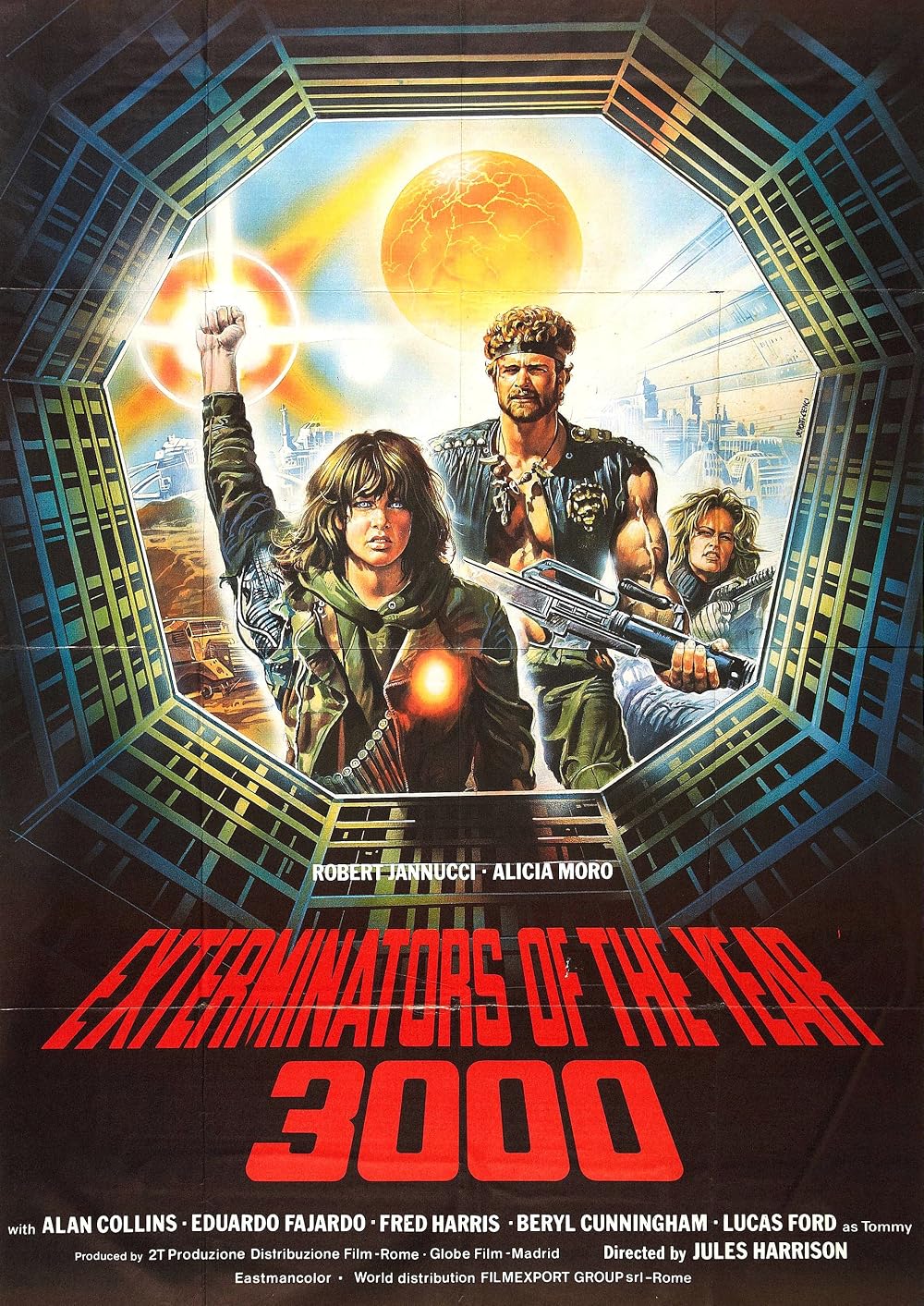
Choke down a mouthful of radioactive dust and strap yourself into the driver’s seat of Giuliano Carnimeo’s The Exterminators of the Year 3000 (1983). In a scorched, waterless purgatory where the oceans have evaporated and “the future of humanity is a race against death,” water has replaced currency as the ultimate prize. The narrative engine is ignited when a peaceful colony of survivors runs dry, sending out an armored tanker to fetch water from a legendary subterranean reserve. When the tanker is ambushed by a pack of leather-clad, motorized savages led by the unhinged Crazy Bull, a cynical, lone-wolf drag racer named Alien is dragged into the conflict alongside a resourceful kid named Tommy and a fierce female warrior named Trash. What follows is a brutal, high-speed story arc that speeds from a desperate water heist into a thunderous, metal-twisting highway war to secure the precious H2O and save the last remnants of humanity.
The steering wheel of this chaotic Italian-Spanish co-production is manned by director Giuliano Carnimeo, operating under the pseudonym Jules Harrison, a versatile genre craftsman who made a major name for himself in the spaghetti western arena directing the popular Sartana sequels and the comedy-western They Call Me Halleluja (1971). Robert Iannucci stars as the rugged, anti-heroic Alien, delivering a highly memorable, leather-jacketed performance that stands as his most iconic contribution to exploitation cinema before his transition away from acting. He is matched by Alicia Moro as the tough-as-nails driver Trash, a physical role she executed shortly before appearing in other Spanish and Italian cult classics like Edge of the Axe (1988) and Slugs (1988). The screen-stealing veteran Luciano Pigozzi, often dubbed the “Italian Peter Lorre” and credited here as Alan Collins, brings a manic energy to the role of Papillon, a performance that came after decades of acting in classic Mario Bava gothic horror films like The Whip and the Body (1963) and Baron Blood (1972). Backed by a relentless, synthesizer-driven score, Carnimeo’s crew stretches their meager budget to the absolute limit, packing the screen with real, bone-crushing car crashes and practical explosions filmed in the desolate Spanish deserts.
Over four decades after it first rumbled onto drive-in screens, The Exterminators of the Year 3000 holds a highly respected, legendary status among connoisseurs of post-apocalyptic exploitation cinema. Far from a lazy imitation of Mad Max 2: The Road Warrior, this film operates with a distinct, manic Italian energy that values practical, high-speed stunt work and pure grindhouse spectacle over big-budget safety. It remains a beloved cult classic, celebrated by midnight-movie audiences for its wonderfully over-the-top dialogue, its bizarrely customized death machines, and its refusal to let physics get in the way of a spectacular explosion. Today, it stands as a fascinating, adrenaline-fueled time capsule of early 80s resource-scarcity anxieties, showing that even in a barren wasteland, a resourceful director with a camera, a heap of scrap metal, and enough gasoline can capture the raw, metallic poetry of the apocalypse.