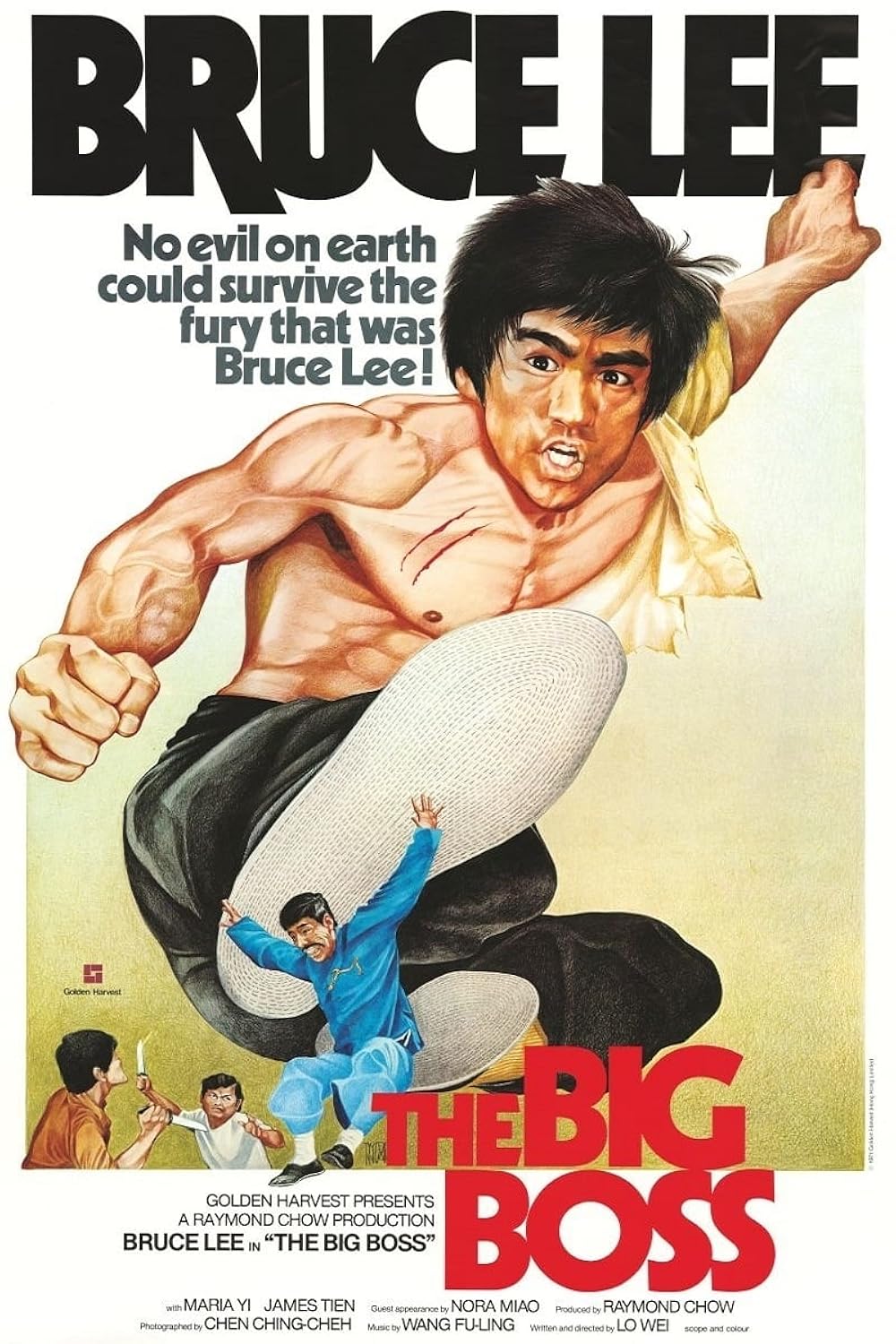
Prepare to choke on the humid, sweat-drenched air of a rural Thai ice factory and plunge headfirst into the raw, skull-cracking revolution of Lo Wei’s The Big Boss (1971). In a corrupt, dirt-caked Pak Chong where impoverished Chinese immigrant laborers are treated like expendable cattle, survival is governed by a singular, blood-soaked tagline: “Cheng Chao-an swore a vow of peace—but they broke his amulet, and now he will break their bones!” The narrative centers on Cheng, a country boy who moves to Thailand to work alongside his cousins under a solemn vow of non-violence symbolized by a jade pendant from his mother. The fragile peace is shattered when the ice factory is revealed to be a front for a massive heroin-smuggling operation, and the cousins who refuse to be bribed are systematically murdered and frozen in the ice blocks. The story arc takes a savage, whiplash-inducing turn when Cheng’s vow is shattered along with his amulet, forcing him to unleash a terrifying, lightning-fast display of pure kung-fu savagery as he storms the mansion of the Big Boss to paint the grounds in corporate blood.
Bruce Lee’s Legendary Breakout Masterpiece
The director driving this low-budget, raw martial-arts breakthrough is Lo Wei, a highly commercial, veteran Hong Kong filmmaker who would later guide early efforts for Jackie Chan in New Fist of Fury (1976) and Spiritual Kung Fu (1978). Martial arts icon Bruce Lee stars as Cheng Chao-an in his legendary, career-defining breakout leading role, a physical performance of sheer, unmatched intensity that set the global box office on fire before cementing his immortal legacy in Fist of Fury (1972) and Enter the Dragon (1973). He is flanked by the charismatic James Tien as his brave cousin Hsu Chien, a standout performance before Tien became a dependable staple in classic action comedies like Winners and Sinners (1983) and My Lucky Stars (1985). Maria Yi plays the sympathetic cousin Chiao Mei, while the formidable martial arts choreographer Han Ying-chieh—who designed the film’s gritty, bone-crunching combat—delivers a chillingly cold, arrogant performance as the drug-smuggling Big Boss. Behind the lens, the production leans heavily into the rough-edged, unpolished aesthetic of a vintage VHS rip, where the high-contrast shadows, over-saturated blood-reds, and a legendary, synth-heavy Mandarin/English dub soundtrack by Peter Thomas make the low-budget violence feel incredibly visceral and immediate.
Why The Big Boss (1971) Is the Ultimate Working-Class Kung-Fu Classic
Over five decades since its explosive theatrical release—and celebrated today through the nostalgic, grime-smeared lens of a vintage VHS rip—The Big Boss stands as a monumental, revolutionary milestone that permanently altered the landscape of action cinema. Before Lee’s arrival, the martial arts genre was dominated by stylized, bloodless wuxia swordplay; here, he introduced a raw, bone-crushing reality of hand-to-hand combat that felt dangerously authentic and fiercely political in its working-class rage. It remains an essential holy grail for grindhouse purists, treasured for its brutal, pre-CGI practical stunts, its infamous ice-pick assassinations, and the magnetic, lightning-fast screen presence that transformed Lee into a global cultural phenomenon. Today, the film serves as a spectacular, adrenaline-fueled testament to the birth of the martial arts craze, proving that with a single, unyielding physical genius and a raw camera, you can shatter the old order and rebuild cinema in a hail of fists.