A Post-Apocalyptic Cult Classic
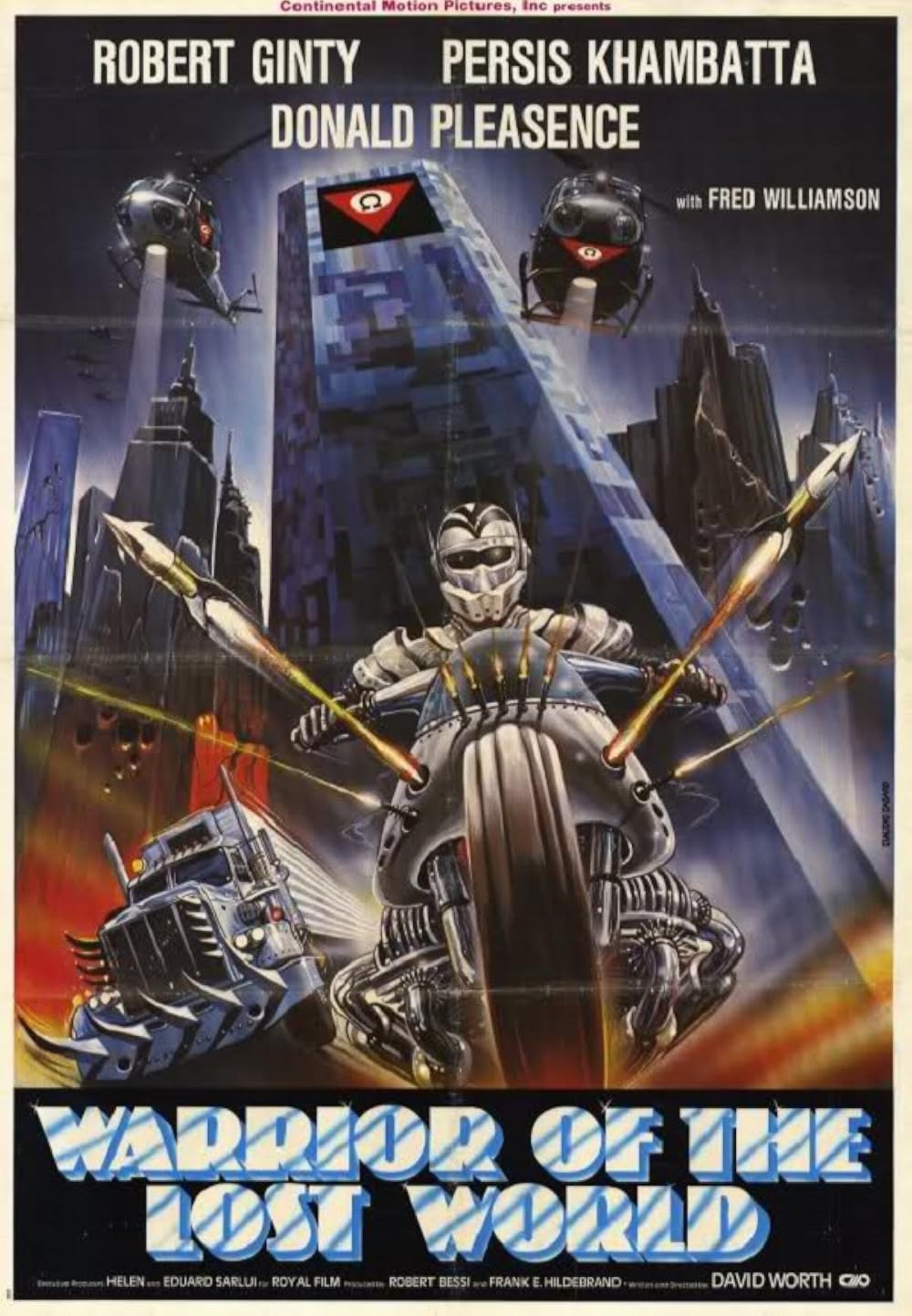
Prepare to choke on the exhaust fumes of a dying civilization in David Worth’s Warrior of the Lost World (1983). In this trash-cinema odyssey through a scorched future, the ultimate weapon is not a thermonuclear device, but a nameless, wandering mercenary on a high-tech motorcycle equipped with a chatty, synthesized artificial intelligence named Einstein. The Rider wanders into a bleak wasteland governed by the Omega, a fascist, clean-cut regime run by the megalomaniacal Prossor. When Nastasia, a fierce rebel leader, is captured, the Rider is dragged into helping the resistance, setting off a chaotic story arc that demands he rescue the girl, destroy the Omega’s terrifying battle van, and spark a full-blown revolution. It is a wildly disjointed, neon-rimmed quest that reduces the standard Hero’s Journey to a series of explosions, laser effects, and questionable stunt work across the gravel pits of Italy.

The director driving this low-budget demolition derby is David Worth, a veteran filmmaker and cinematographer who would later shoot Bloodsport (1988) and co-direct the martial arts classic Kickboxer (1989). Robert Ginty stars as our nameless, blank-staring protagonist, fresh off his gritty turn in the controversial vigilante thriller The Exterminator (1980). He is joined by Persis Khambatta as the rebellious Nastasia, bringing a quiet dignity to the madness after her high-profile turn in Star Trek: The Motion Picture (1979). The great Donald Pleasence, a legendary character actor best known as Dr. Loomis in John Carpenter’s Halloween (1978) and the villainous Blofeld in You Only Live Twice (1967), delivers a wonderfully unhinged performance as the tyrannical Prossor. Fred Williamson, the iconic star of Black Caesar (1973) who later appeared in From Dusk Till Dawn (1996), also injects a welcome dose of tough-guy charisma to the proceedings.
While initially dismissed as a derivative cash-in on the Mad Max phenomenon, Warrior of the Lost World has achieved a permanent, beloved residency in the pantheon of bad-movie culture. It gained widespread notoriety and a massive second life when it was mercilessly lampooned on Mystery Science Theater 3000, cementing its legacy as a supreme artifact of 1980s B-movie excess. Viewed today through a more analytical lens, it stands as a fascinating time capsule of the era’s anxieties over technology and authoritarianism, wrapped in a low-rent, synth-heavy package. It remains an essential midnight-movie experience—a loud, delightfully nonsensical journey that proves sometimes the most memorable cinematic visions are the ones that completely run off the road.