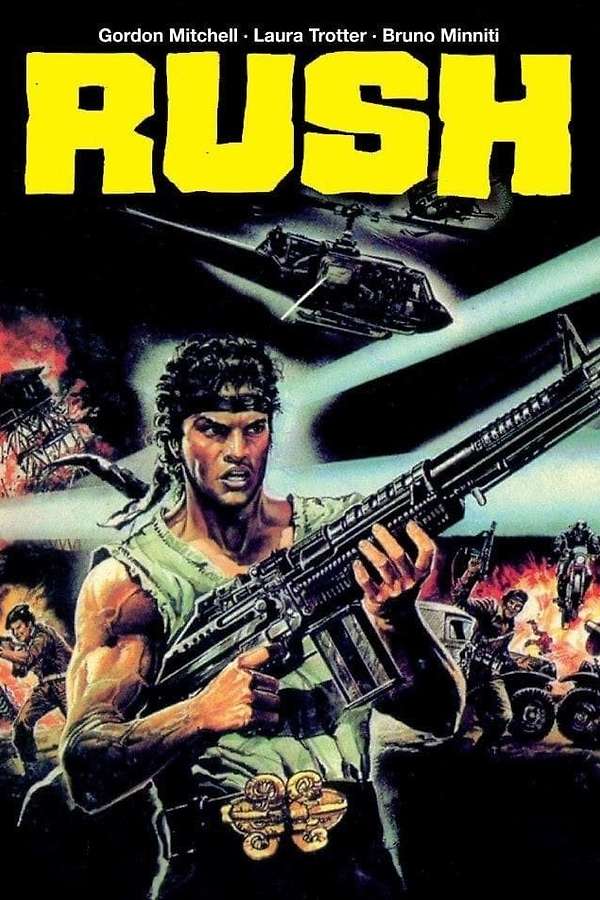
Tonino Ricci’s Ultra-Cheap Post-Apocalyptic Cult Classic
Strap into your dune buggy and prepare to kick up the radioactive gravel of a dying world in Tonino Ricci’s Rush (1983). In a scorched, post-nuclear wasteland where water is a luxury and botany is a forgotten myth, a lone scavenger named Rush battles to survive under the brutal genre tagline: “He’s a one-man army in a world that’s already dead.” The narrative engine ignites when Rush and his ragtag group of oppressed freedom fighters clash with Yor, a tyrannical warlord who controls the only remaining fertile soil and is experimenting on the planet’s dwindling resources to consolidate his absolute power. When Rush’s brother is murdered by Yor’s paramilitaries, the scavenge-to-survive storyline mutates into a relentless, blood-soaked mission of personal vengeance. The story arc shifts into high gear as our leather-clad, Rambo-esque hero wages a guerrilla war against Yor’s heavily armed fortress, culminating in a series of low-budget explosions, machine-gun fire, and a head-on clash with the warlord’s elite security forces.
The director steering this ultra-cheap, quarry-dwelling adventure is Tonino Ricci, a highly prolific Italian B-movie craftsman who specialized in tackling whatever genre was hot, from violent cop films like The Big Family (1973) to cheap fantasy features like Thor the Conqueror (1983) and Rage (1984). Bruno Minniti, credited under the Americanized pseudonym Conrad Nichols, stars as the muscular, Stallone-esque hero Rush, a physical role that served as his introduction to action cinema before reuniting with Ricci for the war thriller Days of Hell (1986) and the children’s fantasy Buck and the Magic Bracelet (1999). He is countered by the legendary muscleman Gordon Mitchell as the villainous warlord Yor, bringing his imposing physical frame and snarling intensity to the screen after a prolific career in classic peplum epics like The Giant of Metropolis (1961) and spaghetti westerns like Born to Kill (1967). Laura Trotter plays the defiant Carol, delivering a solid genre performance that came amidst roles in Italian cult horror films like Bakterion (1982) and the Giallo The New York Ripper (1982). Alongside them, Rate Furlan brings a rough-edged presence to the rebel fighter Itaki, while the action is propelled by a recycled but highly effective synthesizer score by Stelvio Cipriani and Francesco De Masi.
Over four decades after it first cluttered the shelves of VHS rental shops, Rush holds a uniquely fascinating, highly endearing status among die-hard connoisseurs of the Italian post-apocalyptic boom. Far from the high-octane polish of its Hollywood inspirations, Ricci’s film is a glorious monument to guerrilla B-movie resourcefulness, famously substituting spiked shoulder pads with oversized belt buckles and replacing futuristic war machines with modified golf carts in a Rome quarry. It remains a cherished midnight-movie relic for its delightfully clunky dialogue, its shameless blending of Mad Max and First Blood, and its raw, grindhouse spirit. Today, it stands as a wonderful, zero-budget time capsule of the 1980s direct-to-video gold rush, proving that all you need to capture the end of the world is a camera, some surplus leather, and the unyielding audacity to shoot first and ask questions later.