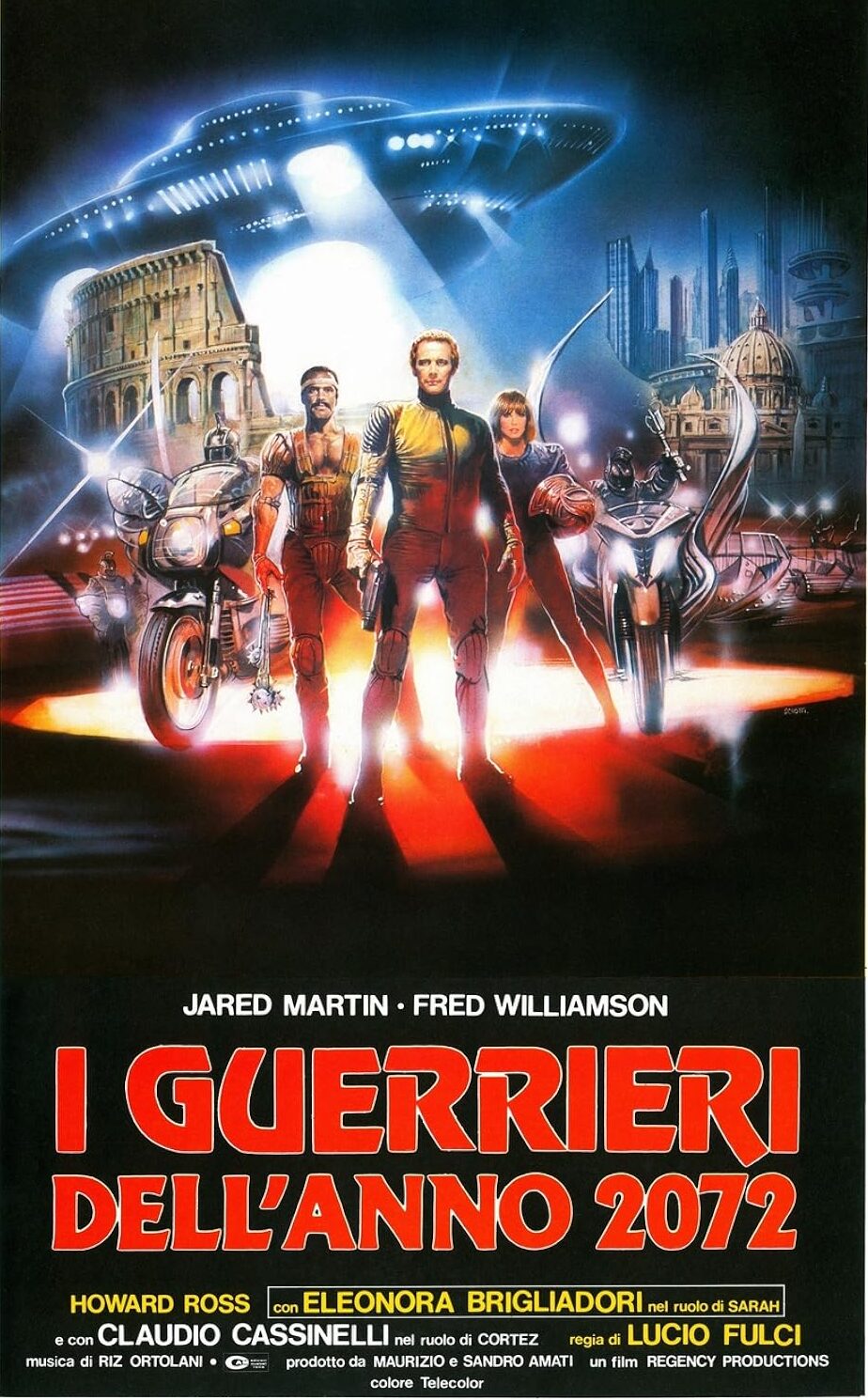
Lucio Fulci’s Cyberpunk Masterpiece
Strap your eyeballs to the screen and prepare for a high-velocity, neon-drenched descent into Lucio Fulci’s Warriors of the Year 2072 (1984). In a decaying, corporate-dominated Rome where a monolithic TV network controls the masses, the ultimate ratings grab is a resurrected gladiatorial bloodsport held in a high-tech Colosseum, operating under the brutal future creed: “The Future is Now. The Game is Death.” The narrative centers on Drake, a disgraced, falsely accused hoverbike champion who is dragged into this electronic slaughterhouse alongside a desperate band of death-row convicts. Forced to fight to the death on heavily armed motorcycles for the amusement of millions, Drake coordinates a rebellion from within the arena. The story arc shifts into high gear as the gladiators turn their weapons away from each other and directly toward the broadcasting tower, staging a suicidal, televised revolution against their corporate masters.
The mastermind orchestrating this beautifully unhinged, synthesizer-blaring spectacle is director Lucio Fulci, the godfather of Italian gore who achieved global notoriety with horror classics like Zombi 2 (1979), The Beyond (1981), and The House by the Cemetery (1981). Jared Martin anchors the cybernetic madness as Drake with a stoic, brooding sci-fi intensity, a notable leading role that preceded his work on television series like War of the Worlds (1988–1990) and Dallas (1979–1991). He is backed by the iconic Fred Williamson as the rebellious gladiator Abdul, bringing his signature blaxploitation swagger to the Colosseum after dominating the screen in Black Caesar (1973) and From Dusk Till Dawn (1996). The cast is further fortified by Italian genre veterans, including Al Cliver, a mainstay of Fulci’s gore classics who memorably starred in Zombi 2 (1979) and The Beyond (1981), and Claudio Cassinelli, who starred in The Mountain of the Cannibal God (1978). Behind the camera, the production features dazzlingly low-budget special effects, utilizing futuristic miniature cityscapes and a blistering electronic score by Riz Ortolani to stretch a shoestring budget into a wild, highly atmospheric vision of dystopian Rome.
Over four decades after its exhaust-choked release, Warriors of the Year 2072 stands as a remarkably prescient and highly respected milestone of Italian cyberpunk cinema. Long before Hollywood polished the concept of televised bloodsports with The Running Man or The Hunger Games, Fulci delivered a gritty, synthesizer-soaked warning of corporate media manipulation and public desensitization to violence, wrapped in the raw poetry of a grindhouse actioner. It remains an essential cult classic, celebrated by midnight-movie purists for its manic motorcycle choreography, its wonderfully bizarre futuristic costumes, and its cynical, anti-authoritarian rage. Today, it serves as a spectacular, adrenaline-fueled time capsule of early 80s anxieties over media saturation, proving that even with a shoestring budget, a legendary horror director could capture the wild, metallic heartbeat of a society on the brink of collapse.