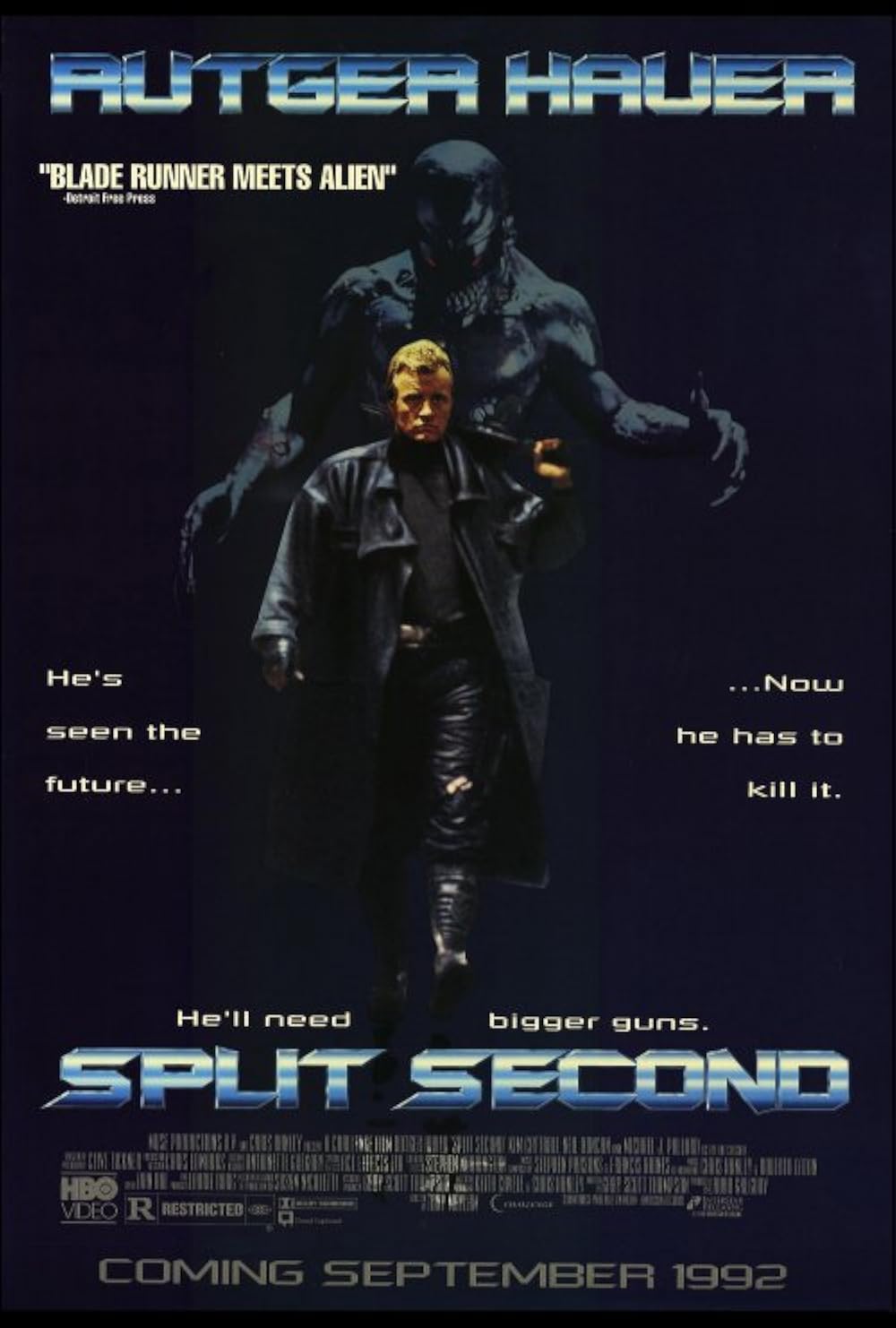
Set in a flooded, dystopian London where global warming has unleashed constant rainfall and turned the subway system into a subterranean swamp, survival is governed by a singular, rain-slicked warning: "In a flooded, decaying London, the only thing worse than the weather is the killer!" Our guide through this wet, decaying hellscape is Harley Stone, a deeply unhinged, sugar-addicted, cigar-chomping detective who survives entirely on caffeine, anxiety, and a pathological obsession with a mysterious, black-armored serial killer who ripped out his partner's heart years ago. When the killings resume, Stone is partnered with a straight-laced, intellectual rookie named Dick Durkin. The story arc shifts into hyper-drive as the mismatched duo descends into the dark, rat-infested underbelly of the city, only to discover that their quarry is not human at all, but a terrifying, telepathic, demonic entity that absorbs the DNA of its victims and kills during the full moon.
Rutger Hauer’s Ultimate Cyberpunk Creature Feature
The director steering this beautifully grimy, atmosphere-soaked sci-fi thriller is Tony Maylam, a highly capable British genre craftsman who previously directed the legendary, shears-wielding summer camp slasher classic The Burning (1981) and the crime drama White Cargo (1973). The incomparable, icy-eyed Rutger Hauer anchors the absolute madness as Harley Stone, delivering a masterclass in manic, sweat-shined, leather-jacket-wearing intensity that stands perfectly alongside his legendary turns as the replicant Roy Batty in Blade Runner (1982) and the terrifying hitchhiker in The Hitcher (1986). He is flanked by Alastair Duncan, who plays the high-strung, straight-laced partner Dick Durkin with a wonderful comedic timing before his extensive voice-acting career in projects like The Batman (2004–2008). Kim Cattrall co-stars as the resilient Michelle McLaine, bringing her magnetic screen presence before her iconic, world-defining turn in Sex and the City (1998–2004). Behind the camera, the production features spectacular, shadow-drenched practical creature effects and miniature cityscapes, utilizing smoke machines, real rats, and a dark, synthesizer-driven score by Stephen Parsons to turn a rain-slicked London set into a convincing, neon-lit, and suffocating vision of ecological collapse.
Why Tony Maylam’s Split Second (1992) Is a Flooded Dystopian Classic
Over three decades after its rain-slicked debut on home video shelves, Split Second stands as a blistering, highly respected masterpiece of low-budget cyberpunk and creature-feature action. While lazy critics initially dismissed it as a derivative blend of Aliens and Predator dropped into Blade Runner’s puddle, modern film scholars and midnight-movie purists celebrate the film for its incredible world-building, its surprisingly progressive ecological anxieties, and its unforgettable, dark-comic buddy-cop chemistry. It remains an essential cult classic, celebrated for its legendary, massive-guns-in-the-sewer sequences, its beautifully dirty, practical production design, and Rutger Hauer’s genuinely unhinged, coffee-swilling charisma. Today, the film serves as a spectacular, adrenaline-fueled monument to the golden age of practical action cinema, proving that with enough gunpowder, a legendary genre icon, and a complete disregard for dry socks, you can capture the raw, metallic poetry of a flooded future.
Watch from YouTube – Cult Cinema Classics Official Channel